






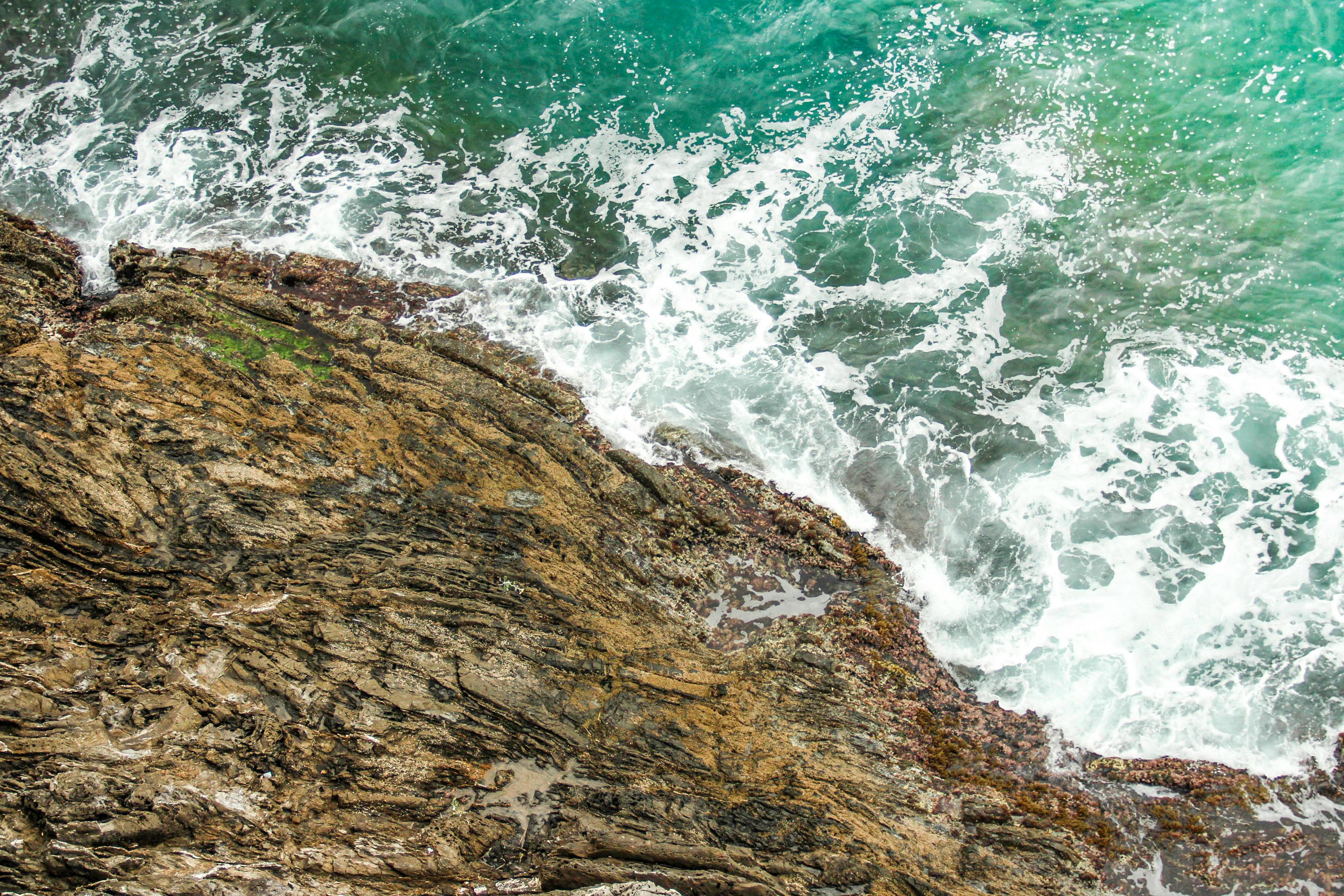
Imagine being a happy sea otter in the Monterey Bay National Marine Sanctuary, living your whole life within a few miles of the same rocky coastline. Swimming around on your back, playing with friends, and eating tasty sea urchins.
From the ocean, sea otters have no idea that the same coast is a major agricultural producer of strawberries, artichokes, and leafy greens. This agriculture produces a significant amount of chemical runoff that goes straight into the ocean and contaminates marine mammal habitats. About 350 miles away in the San Pedro Basin, there is also a former dichloro-diphenyl-trichloroethane (DDT) dumpsite that has created a deep-water toxic graveyard, contributing further to the chemical exposure that marine life faces. Researcher Dr. Logan Pallin told me that he was surprised to find that sea otters had the highest amount of DDT detected in their blood, especially since they spend most of their life within a two mile area.
That area is the Monterey Bay National Marine Sanctuary, a sanctuary surrounded by agriculture and industrial activities. No barrier around the sanctuary can prevent chemicals from intruding. Dr. Pallin explains that the sanctuary protects marine life from large scale extractive operations, like commercial fishing and mining. But, he states, “it is on us to ensure our land practices don’t result in downstream consequences,” referring to marine mammal toxin exposure.
Dr. Pallin’s research in Monterey Bay, California, has shown there are toxins in the blood samples of sea otters and California sea lions, and in the blubber samples of humpback whales. His study has detected 136 total contaminants and 144 Halogenated organic compounds (HOCs). Of the contaminants, there were 54 polychlorinated biphenyls (PCBs) and 82 other compounds, including the deadly DDT. Mammals should not have any of this foreign matter within their bodies. Especially these pollutants, that primarily come from industrial and agricultural processes, like pesticides.
The detection of DDT is so concerning because it is a forever chemical. Meaning it can be broken down into different forms, but forever persists in the environment and migrates across the food chain. The U.S. The Environmental Protection Agency (EPA) banned most uses of the pesticide DDT in 1972 due to its severe environmental impacts and risks to human health. But before then, between the 1940s and 1970s, the Montrose Chemical Corporation in the San Pedro Basin dumped thousands of tons of DDT-laced sludge and barrels, contaminating the ocean floor.
Among the many marine mammals that were tested, one stood out due to having more than 108 different toxins in his system. “The humpback whale, named Batman,” Dr. Pallin said.
He explained that Batman also had Dacthal (DCPA) in his tissue, which is a pesticide that was recently banned under emergency authorization by the EPA. Dacthal was banned because, as the EPA says, it is a “serious health risk”.
We cannot know with certainty what the future of these marine mammals looks like because researchers are only just starting to build a baseline of what marine mammals are being exposed to. Dr. Pallin emphasized that there needs to be future work to classify the exposure of new and other classes of chemicals.
Right now, the best way for the public to support this research and help Monterey Bay protect its marine mammals is to bring awareness to this issue and support related research studies. It is important to remember that we are one ecosystem. Dr. Pallin hopes that everyone will become an ambassador for our marine backyard!
 Rachel Carson National Environmental Leadership Fellow Sofia Trigueros Ufford
Sofia Trigueros Ufford (she/her) is a senior at the University of California at Santa Cruz, double majoring in Latin American Studies and Agroecology. She has the New York State Seal of Biliteracy in English and Spanish. Sofia is passionate about intersectional environmentalism and is involved in many related programs at UCSC and the greater community. She has been a part of the Venom Lab at UCSC for two years, where she has created an online database, researched archives of antivenom records, and analyzed medical records.