






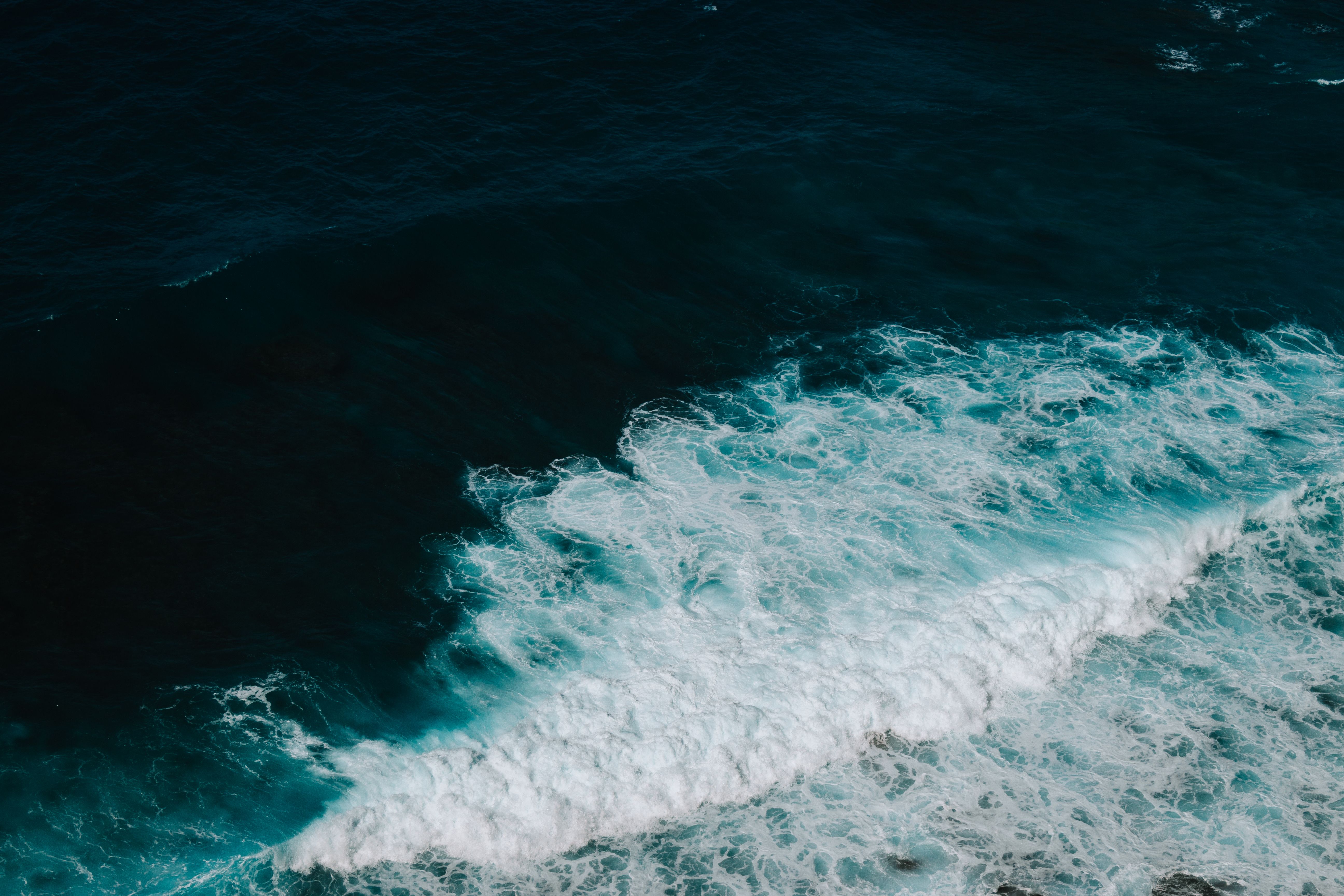
I have a complicated relationship with the ocean. I grew up in Naples, Florida, close enough to smell salt on a bad-weather day, and by the time I left for college I survived two hurricanes that redrew my hometown’s geography without asking my permission. Irma came first, in 2017, making landfall as a Category 3 just up the coast on Marco Island and turning my street into a canal for the better part of a week. Five years later, Ian arrived as a Category 4 and finished what Irma started, flattening entire blocks in neighboring Fort Myers Beach and Sanibel Island and racking up more than $2.2 billion in damage in Collier County alone, which is to say, my county. We rode out Ian at my grandmother’s house, the only ˚ on our block with a generator, and when we finally went outside, the street was unrecognizable, buried under downed trees and a debris field that used to be someone’s roof and driveway. I remember thinking that sandbags were no longer a serious plan.
That is roughly how I ended up double-majoring in Ecosystem Science and Policy and Geography and Sustainable Development at the University of Miami, a school with the odd distinction of training students to study climate change while parked in one of the most climate-exposed zip codes in the country. UM does not let you forget where you are. You can watch the sea-level-rise maps get a little grimmer every semester, like a countdown clock nobody remembers agreeing to set, and most of my professors mention, at some point, roughly which decade Miami is projected to lose the argument. So when I first heard about a UM engineering project called SEAHIVE, I assumed it would be another well-meaning PowerPoint that dies quietly in a drawer, the way a lot of “innovative coastal solutions” do.
I was wrong, mostly. SEAHIVE is a set of hollow, honeycomb-shaped concrete units, hexagonal prisms with perforated sides, designed to be stacked into a kind of porous wall along a shoreline. Instead of reflecting wave energy back at the ocean the way a seawall does, the holes let water pass through and lose its punch on the way, while the structure itself doubles as a scaffold for coral, oysters, and mangrove roots to move in. Some versions are even 3D-printed, through a partnership with a manufacturer called 1Print, which means the “beehive” comparison researchers keep making is not just a cute name, it’s genuinely how the thing looks. I’ll admit that my first reaction, as someone who has spent a week clearing a generator-lit living room while a Category 4 rearranged my neighborhood, was skepticism: a fancy concrete lattice is going to out-negotiate the Atlantic? Sure.
But the more I read, the more the skepticism curdled into something closer to cautious respect, which is admittedly a low bar for a climate story these days, but I’ll take it. SEAHIVE has deployed off Miami Beach, where researchers transplanted more than 1,000 coral fragments onto the structures with an 80 percent survival rate, and it’s since expanded to Pompano Beach, where the design is being paired with mangroves, and to Wahoo Bay in northern Broward County, the largest installation so far. This past June, UM announced the hybrid reef project off Miami Beach was expanding again, with new partners and more units going in. That’s a lot of momentum for something that started as a lab experiment.
What actually won me over, though, wasn’t the survival statistics. It was how unglamorous the project’s lead researcher, Landolf Rhode-Barbarigos, was willing to be about what SEAHIVE is actually for. This was never engineered to stand between a barrier island and a Category 4 hurricane. It was built for a much less cinematic, much more Miami problem: the city is projected to see roughly two feet of sea level rise by 2060, and repairing or raising the thousands of aging, flat concrete seawalls already lining Biscayne Bay is expected to cost Florida something like $75 billion by 2040. Those old walls are also part of the problem, not just the fix, since a flat surface sends wave energy straight down and scours out the sea floor in front of it. Rhode-Barbarigos compares SEAHIVE’s honeycomb shape to something almost domestic.“Think of it as an airbag. It dissipates the energy by allowing the water inside,” Rhode-Barbarigos said.
Given how much of Miami’s waterfront runs on quiet, unglamorous concrete like that, swapping out even a fraction of it for something that also grows a reef is a bigger deal than it sounds. Still, he doesn’t oversell it.
“Any time we do an intervention where you have a human-made component, there is a little bit of impact,” he told a reporter, which is not exactly a tagline you’d put on a grant proposal.
Current installations only run from about 20 feet to 200 feet, a rounding error against the miles of seawall the city actually needs replaced, and long-term monitoring is still ongoing.
“We need multiple solutions and SEAHIVE might not always be the answer to a problem,” he said.
After growing up on a steady diet of miracle-cure headlines about whatever piece of engineering will supposedly save the coast this year, I found that sentence weirdly reassuring. Nobody trying to sell you something admits it might not work.
I don’t think a honeycomb, however cleverly shaped, is going to have stopped what happened to my hometown, and I’m allergic to stories that end with an engineer riding in to fix climate change with concrete and a good marketing team. But I also don’t think that’s what SEAHIVE is promising. It’s promising something smaller and, I think, more honest: a shoreline that absorbs a hit instead of just taking one, and that grows a reef while it’s at it, instead of just sitting there being gray and depressing like the seawalls I grew up next to. In a field that runs on bad news, I’ll take “modest, monitored, and might not always work” over “trust us” any day. My hometown is still rebuilding. I’d like the next wall we put up, if we put one up at all, to, at least, try to make something alive.
 Rachel Carson Council National Environmental Leadership Fellow – Nathan Rubin
Nathan Rubin is a student at the University of Miami studying Ecosystem Science and Policy, with a second major in Geography and Sustainable Development. At the University of Miami, Nathan serves as the Chair of Waste Diversion for EcoAgency, the university’s environmental student government cabinet, where he works on sustainability initiatives related to waste reduction and campus environmental impact. He also serves as Secretary-General for MDMUN, a charity Model United Nations conference that brings together over 1,000 high school and middle school students with low access to for profit diplomacy events.